
Jordan
Toronto, ON
Female, 28
Space Waitress, Trolley Dolly, Stewardess...everyone has their own term for us. We are the baby-sitters, life-savers, servers, cleaners and all-around problem solvers for any and every in-flight issue. Sometimes we get a bad rep for being apathetic and miserable despite having what looks like a glamorous job, so here's a peek into the gritty details beneath the shiny surface to explain why the job - though incredible in lots of ways - is more than just snappy uniforms and matching luggage.
Personally, I say NO. Of all the people I've flown with over the years, I can count the number who studied travel and tourism or went to FA school on one hand - and one of them had to wait years after her graduation before actually getting a job, so there are no guarantees!
If you have work experience that demonstrates your customer service skills that will get you a lot farther than a certificate from any school. Of course post-secondary education is an asset, but don't devote too much money or time on just studying how to be an FA.
All airlines will train you to be the Flight Attendant that they want you to be. Sometimes people tranferring from other airlines have it worse than those of us with no prior experience because they have to "unlearn what they have learned". Announcements and procedures that have been committed to memory suddenly have to be tweaked and adjusted for new verbage or standards. I can see the same thing happening with folks who have studied at a school.
In conclusion, I would say do yourself a favour and just get a job waiting tables - I work with countless servers, I was one myself, and when it comes down to it being a great flight attendant means having good people skills and knowing how to solve customer service issues on the spot. Don't worry about all the safety training because the airline that hires you will tell you all you need to know.
I hope that helps!
Share Answer: 

Unfortunately, as of yet, I don't think you can wear a turban while on duty. I can only speak for the airline I work for, but I've also never seen an FA - or a pilot for that matter - wearing a turban during my travels in other corners of the world.
Airline uniform standards are strict at the best of times and any articles that deviate from the standard, whether they are representative of a faith or not, need to be removed or hidden from sight while at work. That means cross necklaces, tattoos, some piercings, and I'm afraid, turbans, to name a few. While on layovers all bets are off and you are welcome to wear whatever you please of course!
There's another factor at work here - safety regulations. One of the inflight safety tools is a smoke hood which is worn over the head to provide oxygen and protection if, heaven forbid, you need to fight a fire. While I'm grateful we have them onboard, it's in part because of them that we have such strict grooming standards; we need to be ready to pull one over our head at the drop of a hat, so for girls that means hair must be pinned back out of the face and earrings can't be too long. For guys, it means that facial hair must be limited and closely trimmed - a beard can interfere with the seal the smoke hood makes around your nose and mouth to supply oxygen. I'm sure my airline would cite that darn smoke hood as a reason to deny you your turban as well. They may also add that it presents a security problem since we aren't allowed to have anything covering our head or face when accessing the airline crew security bypass point.
Don't be discouraged! If becoming a flight attendant is something you're really passionate about I would suggest you investigate airlines worldwide to see if there are any exceptions that allow turbans. I don't take cultural and religious traditions lightly, so I hope you're able to find a great employer or else a comprimise that you're happy with. I will add that I have seen plenty of airport employees and government employees at the security checkpoints who wear turbans!
Good luck!
Share Answer: 
Oh gosh... I'm really not sure! If it were me, I wouldn't mention it unless the application form specifically asked. I was laid off from a previous job and don't remember mentioning it on my application or during my interview. Just be prepared to explain why you were fired in case you do get asked during an interview, because honesty is the best policy. If you were at fault then be ready to explain how you learned from the experience, and if you were wrongfully fired than don't dwell on being the victim. Disclosing that you were fired won't do you any favours on paper, but in person you can put a positive spin on anything, and being open about previous mistakes can demonstrate a lot of maturity and openness to feedback that a potential employer may like.
I'm no recruiter so I'm sorry I don't have a black or white answer for you - my guess is that it will depend on each airline's company policy - but in my opinion that is information that only needs to be given if requested.
Good luck!
Share Answer: 
Sure I have! It can be a bit unnerving, depending on what the situation is, but having good communication between the pilots and the cabin crew can really put you, and the guests, at ease.
A couple years ago I had a flight where a "mechanical difficulty" happened in the flight deck. Forgive my lack of technical knowledge, but basically it was a heater that kept the front window a specific temperature so that it didn't fog, and also gives it a malleable consistency so it doesn't crack during a birdstrike. We were en route from Montego Bay to Toronto and ended up diverting to Florida to get the piece replaced.
I was pretty tense when the Captain first notified us of the problem since we FA's weren't sure how serious it was, but I've worked with a lot of great pilots who explain situations clearly and without panicking passengers. We secured the cabin for arrival and prepared for a normal landing but with heightened awareness - the plane was heavy with extra fuel to get us to our final destination. Once we landed it was just a matter of keeping the guests happy until we could take off once more and continue the flight.
In a more severe situation, when the plane has to prepare for an emergency landing, FAs use an Emergency Landing Checklist that helps us to prepare the cabin for a hard landing, either on land or water, and possibly evacuate afterward. Thankfully I have never had to resort to that during any of my flights, and although I know crew who have had an engine failure during the flight or landing gear that didn't retract, they too just prepared for a "non-normal landing" rather than an emergency. (those flights landed safely without incident)
I will add that when there have been unusual situations that arise from mechanical difficulties mid-flight, I have been really impressed with the passengers and how calm and patient they were. It makes a big difference to your crew!
Share Answer: 
Antiques Dealer
 Does a piece's value increase significantly if it has a cool "back-story" to go along with it?
Court Reporter
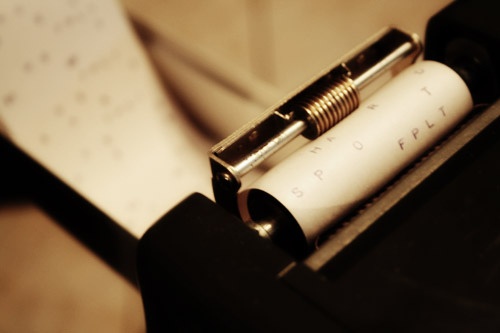 If your special keyboard lets you type 200+ words per minute, why doesn't everyone use them?
Bouncer
 What's the best way to "get in good" with the bouncer at the door?
Hmm... it could depend on the airline, but in my experience health benefits don't come into effect until one has been an employee for 3 months and passed a 'probationary' period. For me, that was all it took for me to be considered a full time employee, even though I still have to hold reserve on occasion. Other airlines only hire flight attendants seasonally and require them to hold reserve exclusively for the duration of their employment before being laid-off at the end of the season. As far as I know from speaking to former FAs of those airlines, they don't receive either flight or medical benefits, unfortunately. It ultimately doesn't matter so much about whether or not you're assigned reserve vs. scheduled pairings, but how long the company has hired you for. I would recommend inquiring at the particular airline you're interested in!
Share Answer: 
Yes indeed! You will get a flat rate (I received 4.5 hours pay for each day of training even though the classes were more like 8 hours a day) because a flight attendant's salary is based on working 80hrs/month and it would be too costly for the airline to pay it's new hires the hourly wage for the duration of training, which could add up to 160hrs/month.
You may have some up front expenses like paying for your uniform (some airlines charge the employee, others don't), or paying for a hotel if you do not live in the city where the training takes place (this is not covered by the airline). I just read about an airline that made its employees pay for a portion of the training that was taught by Disney, which is atypical and kind of bizarre.
You won't receive per diems during your training as that's something you only accrue while away from base (ie: on a pairing). I hope that answers your question!
Share Answer: 
Hey George,
I've flown with hundreds of pilots and can only recall two who also previously worked as flight attendants, however they both already had their pilot's license before they chose to become cabin crew. In other words, they met all the qualifications to become a commercial pilot (certified and flown a minimum amount of hours) but they were having a hard time getting a job at the airline they were interested in. They each seperately opted to become FAs at the airline just to get their foot in the door in order to network with the intent of eventually getting hired as a pilot internally. One of them also worked as a fueller for the same reason but hated it so much he transferred to the inflight department after a week!
So my bad news to you is that one way or another you'll have to pay for flying lessons and build up your hours, because those qualifications are pre-requisites to becoming a pilot and no amount of networking can get you past that. That said, I work with a handful of flight attendants who take flying lessons, and are slowly working up to their full pilot's license by paying for it over several years. If you have an interest in becoming a Flight Attendant anyway, it's not a bad way to pass the time while you save up for flying lessons. Be warned though, they are two vastly different jobs, and if you don't enjoy customer service you'd be better off getting a job as a ground handler or aircraft caterer if you are determined to get hired in the industry while you work up to becoming a pilot!
As for the stereotypes about male flight attendants, if you plan to work in the commerical airline industry - as a pilot OR an FA - I'd recommend you keep an open mind since people from all walks of life choose to work for airlines and you will be working alongside them. Let go of the stereotypes, don't assume anything about your co-workers, and don't worry about what people might think of you! Don't let other people's uninformed opinions stand in the way of something you want to achieve, or you won't get anywhere!
oh - and I've only ever heard English used on the aircraft radios, regardless of the country we're flying into, so stick with that!
Share Answer: 
-OR-
 Login with Facebook
 (max 20 characters - letters, numbers, and underscores only. Note that your username is private, and you have the option to choose an alias when asking questions or hosting a Q&A.)
(A valid e-mail address is required. Your e-mail will not be shared with anyone.)
(min 5 characters)
By checking this box, you acknowledge that you have read and agree to Jobstr.com’s Terms and Privacy Policy.
-OR-
Register with Facebook(Don't worry: you'll be able to choose an alias when asking questions or hosting a Q&A.)



 Browse Jobs
 Host a Q&A
 Search

 Submit Your Question
 Host a Q&A
 Last 7

